Write the acceptance contract first
Start with the job your product sells. For a support assistant, that might mean drafting a reply grounded in an approved knowledge base. For an invoice tool, it could mean extracting a vendor, currency, and amount into validated fields. Define an acceptable result before choosing the model: required fields, source attribution, forbidden disclosures, and cases that must go to a person.
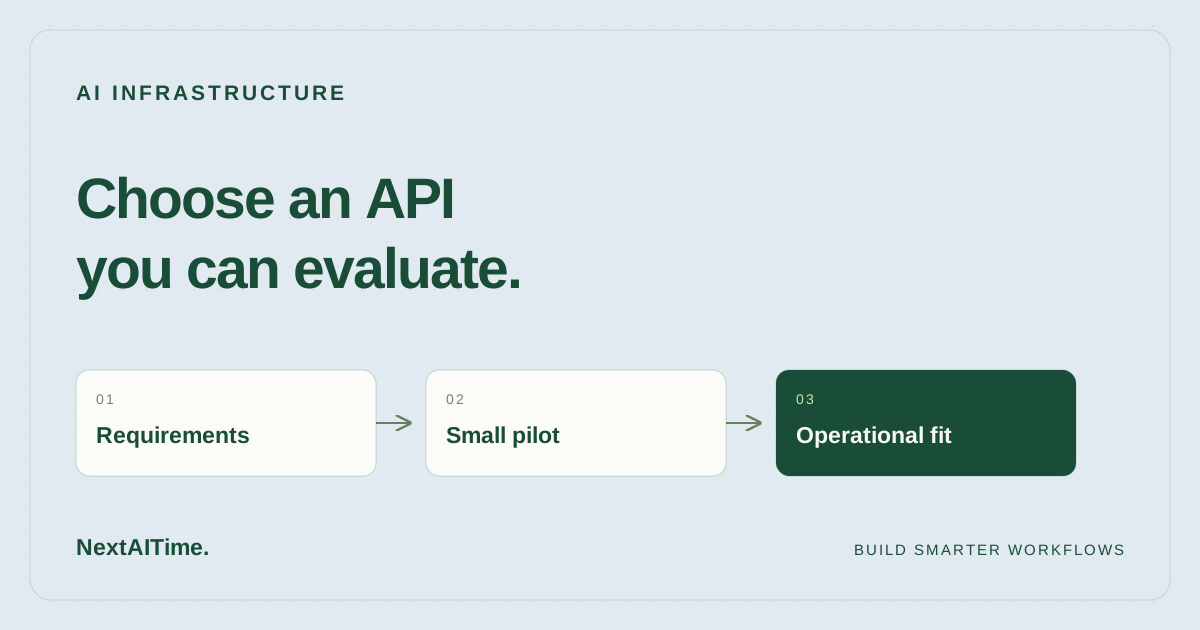
Build a small, versioned set of representative inputs, including missing information, long documents, contradictory instructions, and malformed attachments. Use synthetic or appropriately approved examples. Record both a reference answer and the reason it is acceptable. Keep some examples out of prompt development so your final check does not merely reward a prompt tuned to its own test cases.
Compare the platform layer you actually need
A direct model API gives your application a relationship with the model provider. A gateway introduces another service for routing or governance. A cloud platform may fit existing account, procurement, or infrastructure practices. These are architectural options; their actual features depend on the specific service and contract. Do not assume a gateway makes different models interchangeable.
Ask each candidate the same questions: which interface will you use, which model version will you pin, how are credentials scoped, and who helps when requests fail? Record the exact SDK version and deployment region where applicable. If structured output or tool calls are essential, verify the current documentation and run examples against your own schema. Similar request shapes do not establish identical behavior.
Make failure behavior part of the trial
Your wrapper should distinguish a transport failure from a valid response that fails business validation. Give each operation a deadline, cap retries, and retain enough metadata to diagnose the failure without storing unnecessary customer content. Retrying the whole workflow after an uncertain response can repeat an external action; use an application operation ID and deduplicate side effects.
Test a timeout, an invalid response, and an unavailable dependency. Decide whether each case should retry, enter a review queue, or return a clear failure to the user. A fallback model needs its own acceptance check because it may interpret a prompt differently. Start with a graceful error if you cannot afford to validate and maintain two providers.
Inspect what the SDK records
Observability is useful only when you understand its data boundary. For example, the official Claude Python SDK README documents OpenTelemetry integration and a content mode that includes prompts and completions. It also documents disabling telemetry spans. This is a concrete reason to inspect SDK settings before connecting a tracing service; it is not a statement about every provider's logging defaults.
For your chosen stack, list where requests, responses, traces, and support exports can travel. Check retention, deletion, training-use terms, and contractual requirements separately. A setting that suppresses application logs does not answer what the upstream provider retains. Keep API credentials on the server, restrict access to production traces, and redact secrets before any request leaves your application.
Measure the cost of an accepted outcome
Compare the total work required to produce an acceptable result. Include unsuccessful calls, retries, retrieval, tool execution, and human review alongside model usage. Record actual billing units from each candidate and apply the current rates for the plan and date you are evaluating. This guide intentionally gives no price comparison because a rate without a workload is a weak purchasing signal.
Use a worksheet with input identifier, model version, acceptance result, elapsed time, usage, retry count, and review effort. A cheap first response can become expensive when someone must repair it. Conversely, a more capable model may be unnecessary for a narrow classification task. The AI stack budget guide helps turn those observations into a spending limit.
Choose with explicit stop conditions
Make a short decision record: chosen workload, accepted failure behavior, measured trial results, unresolved data questions, and the reason the platform fits your team. Resolve mandatory security or data requirements before sending real customer inputs. Schedule a reevaluation when the task, model version, or volume changes materially.
Before launch, put a usage ceiling and an emergency disable path around the feature. Expand the architecture only when a documented problem justifies it. Pair this checklist with a reliable AI workflow design so provider selection and application safeguards support the same acceptance contract.
Sources & further reading
Primary references used for product and technical information. Features and terms can change; check the provider before committing.
- Anthropic: Claude Python SDK READMEAccessed 2026-10-17