Protect your attention, not just your subscription budget
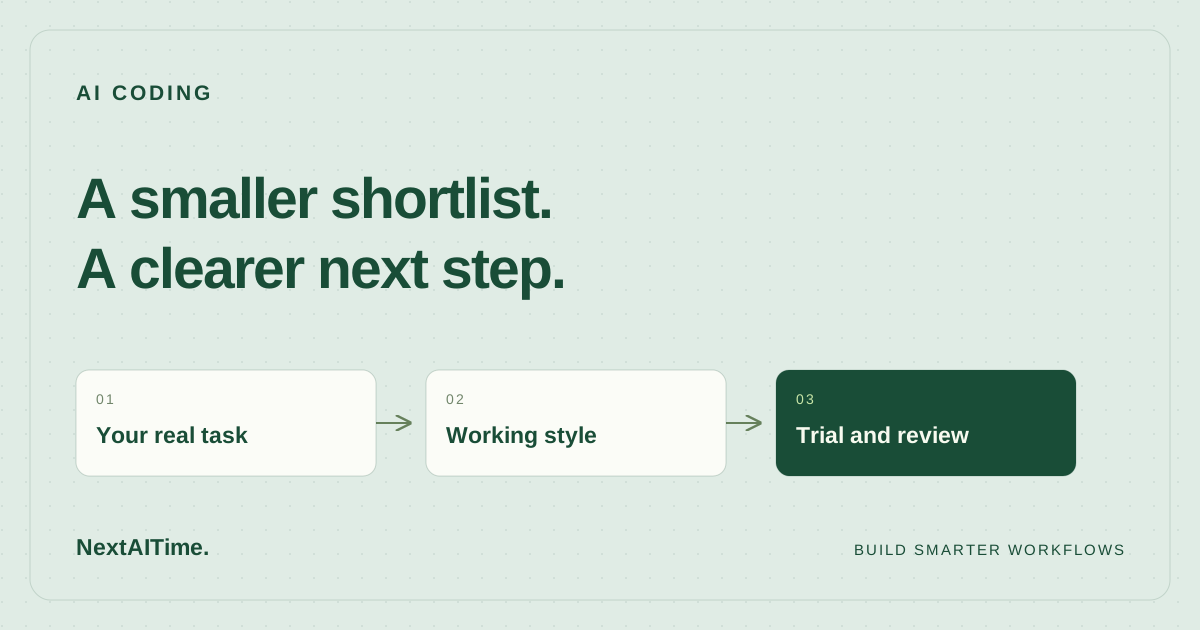
This is source-based analysis of official documentation accessed October 17, 2026. We have not tested these products on a shared repository, measured speed, or verified paid plan entitlements. The shortlist concerns repository-aware development assistance for solo developers. It is a set of task-based starting points, not a performance ranking.
Working alone makes review capacity a purchasing constraint. You own the issue, implementation, deployment, and later maintenance. Before adding an assistant, ask whether you can recognize a bad suggestion, whether the task has a clear completion check, and whether you can inspect the resulting patch in one sitting. Prefer a smaller unit of assistance when your available review time is short.
Four candidates for different sizes of assistance
For suggestions while you write familiar code, consider GitHub Copilot. GitHub documents inline code suggestions in supported editors. Start here if you know the intended implementation and want help filling a small function or test. Accept only code you can explain. Copilot is not limited to completion: its overview also documents assigned tasks, code changes, and reviews. Availability depends on plan, client, and organizational policies.
For a feature that needs coordinated edits, consider Cursor Agent. Its official overview describes codebase search, editing, and terminal execution in a sidepane workflow. A useful solo-developer job is connecting a form to an existing endpoint while inspecting both files. Set a file and behavior boundary so a convenient implementation session does not create an afternoon of review.
For understanding unfamiliar code before taking responsibility for it, consider Claude Code. Anthropic's official README describes code explanation, routine task execution, and Git workflows through a terminal-oriented interface, with IDE and GitHub entry points too. Ask for a trace through an existing request before authorizing changes. Explanation quality must be checked against the actual code.
For a separate pass over your own patch, consider Codex CLI. OpenAI documents dedicated review against uncommitted changes, a commit, or a base branch without modifying the working tree. This is a candidate when you can implement a change but struggle to switch into reviewer mode. Its findings are hypotheses to investigate, and it also supports implementation work.
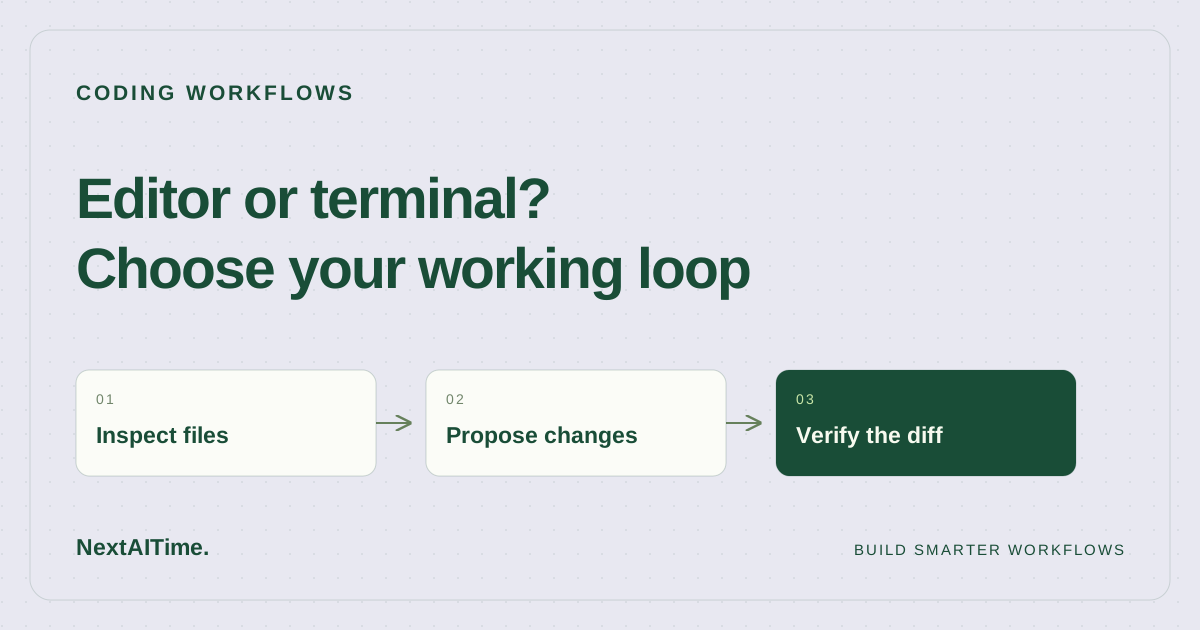
These roles overlap across products. The distinction is the size of the assistance you request, from a suggestion to a change to a review. Pick one candidate that serves your immediate bottleneck before exploring its other surfaces.
Use one maintenance task to decide how much help you need
Suppose a search page loses its selected filters when the user changes pages. First write the expected behavior: preserve the existing filters and URL format, including empty values. Locate the request builder yourself if you can. If the fix is a small change you already understand, inline suggestions may be sufficient; a repository-wide agent task adds little value to that particular need.
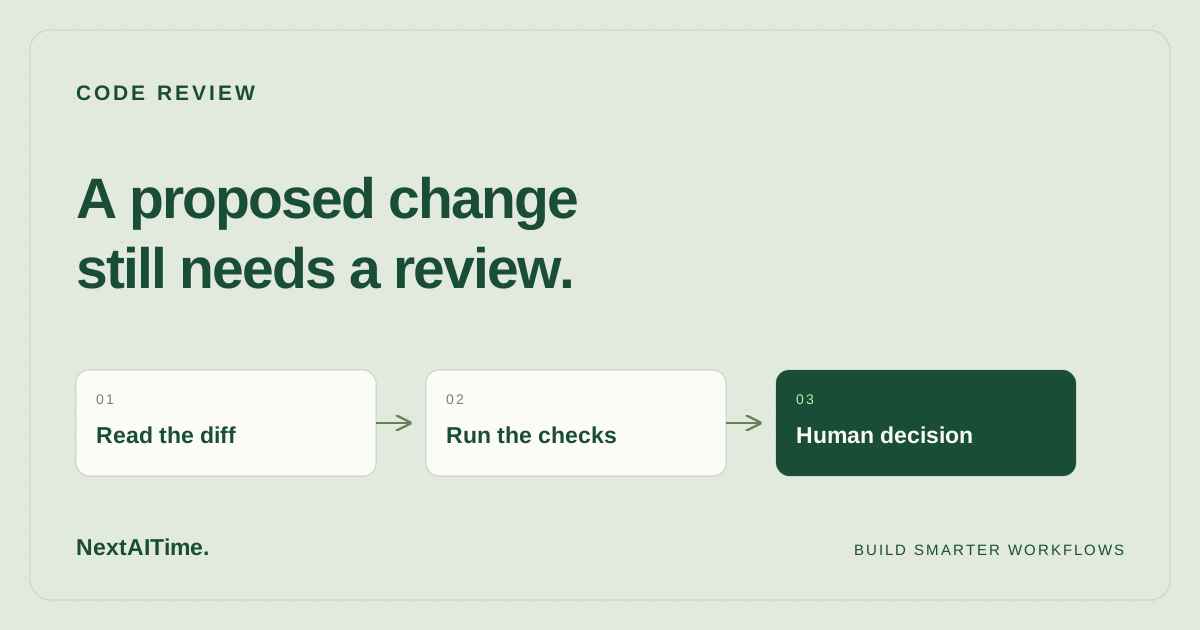
If you cannot find where state becomes a request, ask for a code-path explanation with file references. If the fix crosses components, request a plan before editing. If the patch is already written, request a diff review focused on the filter contract. This sequence helps you avoid delegating a larger task simply because the tool offers it.
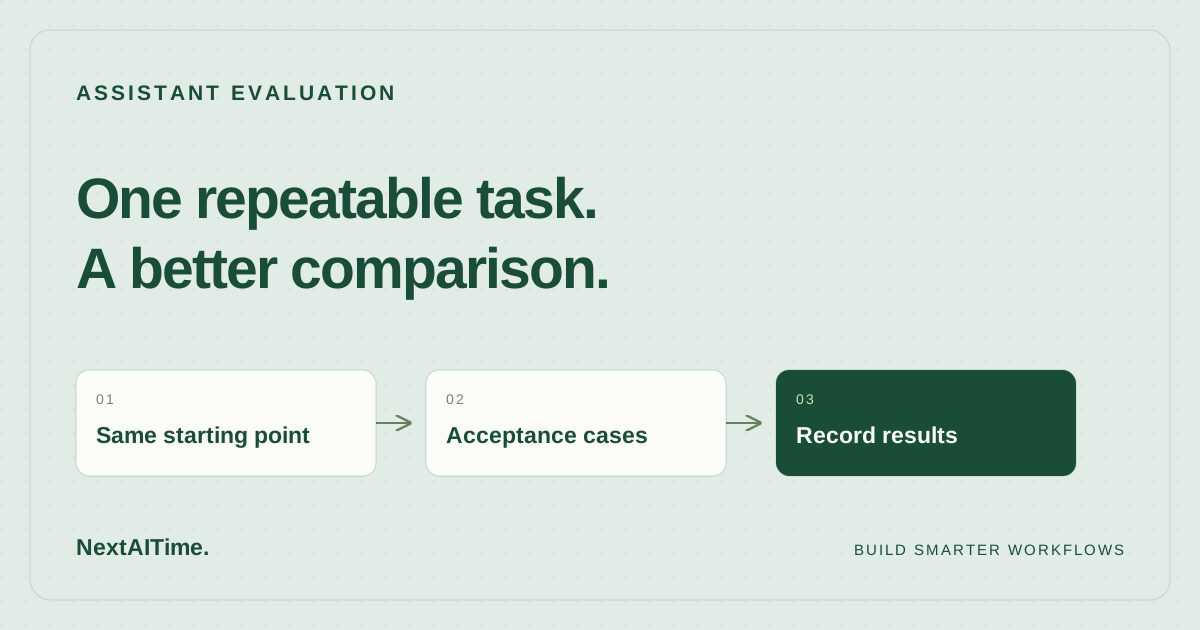
Work in a clean branch with local fixtures and the repository's normal checks. Inspect both the successful second-page request and the empty-filter case. Record which step needed assistance and which step you still had to do manually. Those notes identify the capability worth paying for.
Apply solo-developer acceptance criteria
| Constraint | Practical acceptance question |
|---|---|
| Limited review time | Can I explain every changed file before merging? |
| Frequent interruptions | Can I resume from the issue, diff, and saved notes without reconstructing the whole conversation? |
| Maintenance ownership | Does the result follow existing patterns and avoid dependencies I do not need? |
| Verification effort | Do actual command outputs demonstrate the behavior, and are skipped checks identified? |
| Account and environment fit | Does my current editor, operating system, and available plan support the surface I need? |
Keep observations separate from expectations. A documented capability does not establish successful execution. A useful explanation does not establish a correct patch. Stop the trial if you cannot inspect its output; simplify the task before trying more automation.
Keep the stack small enough to understand
Start with one primary assistant and your existing editor, Git, and test tools. Add a second paid product only when you can name a recurring task the first workflow handles poorly. Using several assistants may provide different suggestions, but agreement between models is not evidence that a patch is correct.
Check current subscription terms, usage limits, supported environment, cancellation conditions, and code handling policies before buying. This guide deliberately omits numeric prices and does not claim any particular task is included in a plan. For a useful spending boundary, connect each subscription to the task it serves in your AI stack budget.
Decide by the patch you can own
Keep the candidate if it helps produce understandable changes with verifiable outcomes and acceptable review effort. Pause or change tools if you repeatedly repair unrelated edits or cannot explain the generated code. The objective is a development workflow you can sustain alone, including the days when the assistant is wrong.
Our workflow comparison explains the shortlist in more detail. Before shipping the trial patch, follow the practical review checklist and retain the evidence that its important behavior works.
Sources & further reading
Primary references used for product and technical information. Features and terms can change; check the provider before committing.
- Cursor Agent overviewAccessed 2026-10-17
- Anthropic Claude Code official READMEAccessed 2026-10-17
- OpenAI Codex CLI documentationAccessed 2026-10-17
- GitHub Copilot overviewAccessed 2026-10-17
- Getting code suggestions in your IDE with GitHub CopilotAccessed 2026-10-17